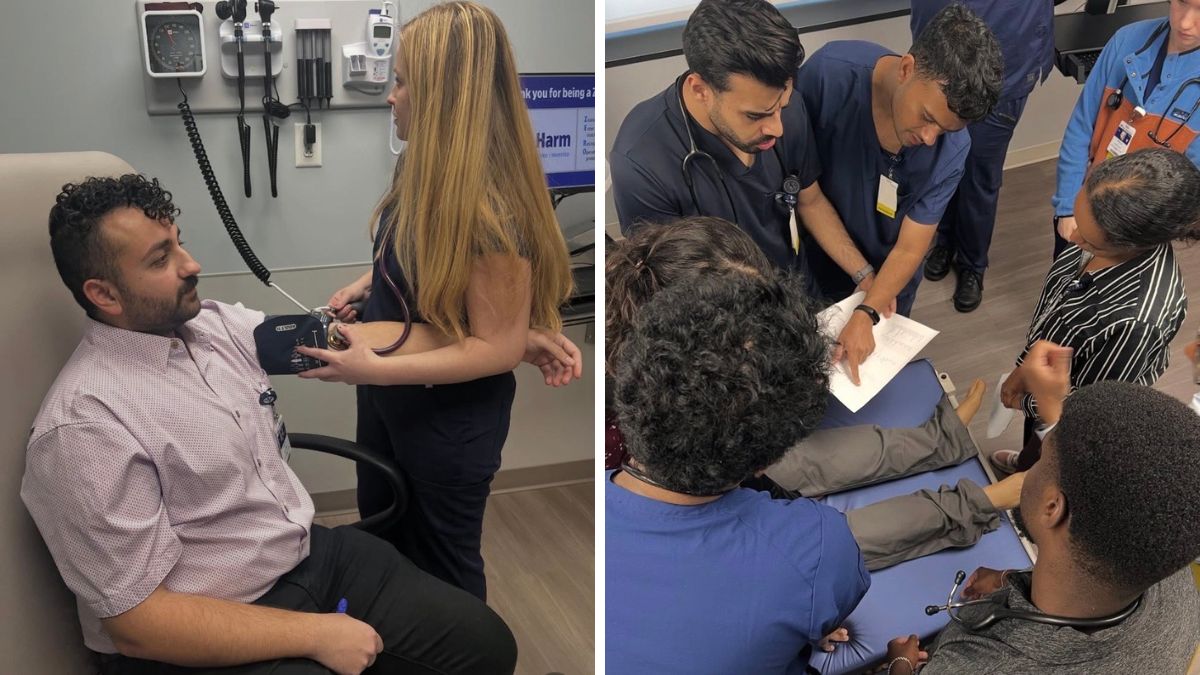
It’s not often that patients can have such a direct role in shaping a new generation of physicians, but the Bon Secours internal medicine residency program now entering its second year offers just such an opportunity.
The three-year program welcomed an additional 12 resident physicians this summer and expects to add another 12 next year, according to Katherine Lumpkin-Leech, associate program director for the Bon Secours St. Francis internal medicine residency program.
Growing the Bon Secours internal medicine residency program
The resident physicians are based at Bon Secours St. Francis Downtown and an adjacent internal medicine practice launched in conjunction with the start of the residency program. Internal medicine focuses on the diagnosis and prevention of diseases in adults, both common and chronic. Internists are trained to deal with complex and overlapping health issues.
Among other reasons, the Upstate’s rapid population growth continues to drive a need for more trained physicians, according to Lumpkin-Leech.
As an example of the growing need, she said when she was a hospitalist at St. Francis Downtown more than a decade ago, the average patient census during June and July – typically two of the slowest months of the year for hospital admissions – was around 80 or 90 patients.
This year that number has hovered between 200 and 250 patients, she said. From a practical standpoint, this has given the internal medicine resident physicians invaluable experience working with patients experiencing a wide variety of medical needs.
Lumpkin-Leech said while adding 12 new resident physicians to the program this year will help meet the needs of a larger hospital census, it also creates the need for more patients to enroll for primary care with the internal medicine residency practice.
The practice has about 150 patients enrolled, and Lumpkin-Leech said the goal is to reach around 1,000 patients by the time the residency program reaches its full complement of 36 physicians next year.
For patients being seen by residents paired with attending physicians in the hospital setting and then to follow up with those same physicians in an outpatient setting at the internal medicine residency practice has become nearly obsolete in the wider medical world, Lumpkin-Leech said.
“That wraparound care or continuity is extremely rare to find almost anywhere else in medicine,” she said.
Since the internal medicine residency practice is a training ground for a new generation of doctors, patients can expect more individualized attention and time from the residents and attending physicians.
Because of that time commitment, the program is not for everyone, Lumpkin-Leech said. On the other hand, she added, patients have the very real prospect of shaping the types of physicians the residents will ultimately become.
Growing the doctors
For Daniel Maysonet, one of the inaugural resident physicians now entering his second year in the program, interacting with and building relationships with patients in the hospital and as outpatients at the internal medicine residency practice has been hugely rewarding.
“It has been very eye-opening and a great learning experience for me,” Maysonet said.
As someone who got into medicine because he wanted to help people, he said he came into the residency wanting patients to feel seen and heard and understood.
That takes time. He said part of the invaluable experience of training with experienced physicians has been constructive feedback on things like balancing the amount of time with a patient and staying on topic to ensure the patient’s medical needs are met.
Maysonet said he has also learned from patients that there can be many other factors at play that can impact medical outcomes. Learning about those social determinants and the potential barriers patients face that can impact their ability to get to appointments or obtain medications and take them in the prescribed manner is helping to make him a better, more caring physician, he said.
This interplay between residents, patients and attending physicians is what makes the internal medicine residency program such an invaluable learning experience, Lumpkin-Leech said.
“We very much appreciate the community service that is (provided by) the patients who come to our clinic because they’re helping to train the next generation of physicians,” she said.
The physicians may be providing the medical knowledge, but the patients are at the core of the team and are ultimately the ones in charge of their medical outcomes.
“I think the big thing that we try to do is build a rapport with our patients, to let them know that they can trust us and what we’re trying to do is what is in the best interest of the patient,” Maysonet said. “We’re a team at the end of the day.”
Want to help?
The Bon Secours St. Francis Internal Medicine Residency Practice continues to accept new patients.
- Address: 317 St. Francis Drive, Suite 210, Greenville
- Phone: 864-767-6279
- Online: bonsecours.com