A popular centerpiece of Conestee Nature Preserve largely destroyed by Hurricane Helene is open again thanks to funding through Fluor’s Golf for Greenville charity fundraising initiative.
The West Bay boardwalk reopening was celebrated Sept. 17 with a ribbon cutting. Representatives from the preserve, Fluor and the community partners who helped rebuild the boardwalk detailed the scope of the project.
Critical connection
Helene’s Sept. 27, 2024, rampage through the region devastated Conestee Nature Preserve and destroyed much of its infrastructure, according to executive director Erin Knight.
Downed trees and historic flooding largely destroyed the West Bay boardwalk, the preserve’s most popular attraction. It connects the trail system to the lake and wetlands at the heart of the preserve.
Knight said the boardwalk is a vital connector for the preserve, not only linking trails but underpinning its central role of connecting people to nature.
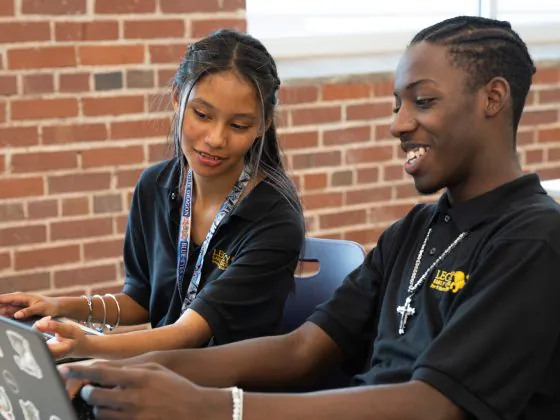
Welcoming a group of students from Lead Academy — who formed the inaugural group of students to visit the reopened boardwalk — Knight said the preserve’s education and preservation mission would not be possible without the support of community partners like Fluor.
Playing a role in restoring such an iconic component of the preserve has been rewarding for Fluor, especially as it aligns so closely with the company’s commitment to conservation through community philanthropy, said Lynn Mann, community relations director for Fluor.
“The chance to have a real impact, to put something back and put it back better … we’re just thrilled to have played a role in that,” Mann said.
She added that since its 1989 launch by Fluor employee volunteers, the Golf for Greenville fundraiser has generated more than $9 million to support community nonprofits like Conestee Nature Preserve.
Novel solution

Thanks to Fluor’s support and commitment, Knight said she and her leadership team were able to pivot priorities in the wake of Helene’s devastation.
The funding provided by Fluor was initially aimed at expanding Conestee’s infrastructure — plans that had to be scrapped following the storm.
When the priority shifted to rebuilding the roughly 1,000-foot West Bay boardwalk, Fluor’s support was unwavering, Knight said.
But in designing the replacement boardwalk the project encountered a challenge stemming from the preserve’s fundamental wetlands character: soft soil.
To surmount this challenge, S&ME engineers were brought in and came up with a novel solution.
Read more Hurricane Helene news
Initial plans to use helical anchors to secure the boardwalk proved unworkable due to the depth of soil instability. Instead, S&ME recommended something called Platipus soil anchors which work in roughly the same way as expanding sheetrock anchors.
According to Jacob Foose, S&ME environmental operations manager, a major benefit of such anchors for a project like the West Bay boardwalk, which traverses naturally flood-prone wetlands, is how they provide vertical stability. In essence, the anchors prevent uplift due to conditions like flooding in addition to preventing sinking due to the soft soil.
Once the anchoring challenge was solved, the team from TreeHugger Customs was able to rebuild the boardwalk on time and on budget, Knight said.
The hope is the new anchoring system will ensure the West Bay boardwalk will prove more resilient and able to withstand the preserve’s periodic flood cycles and other weather stresses.