Big things often start from the humblest of beginnings. For the Hispanic Alliance it started with a handful of people asking a simple question: “How can we help?”
That question was born from the observation that the growing numbers of Spanish-speaking people moving to the Greenville area often lacked the knowledge of where to go for essential services.
None of that first group who gathered to answer a question imagined their efforts would evolve into an institution dedicated to building bridges of understanding, dignity and community, said Wilfredo León, one of the alliance’s founders.
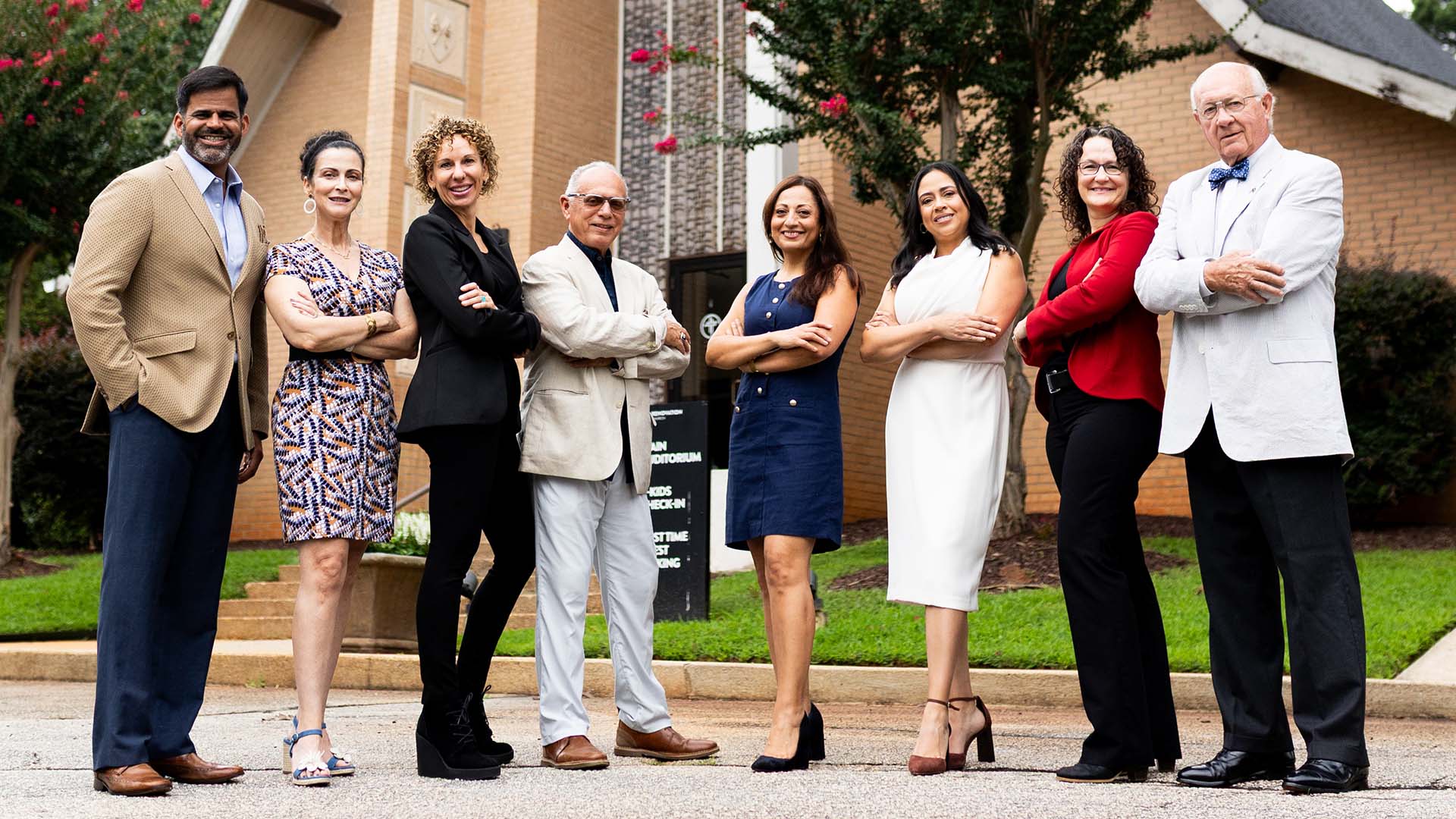 Hispanic Alliance leaders past and present, from left: Mahler Nuñez, Lissette Treanor, Nathalie Morgan, Wilfredo León, Adela Mendoza, Johanna Perez, Tricia Ravenhorst, Alfred Middleton. The group is in front of the former St. Francis Episcopal church on Edwards Road in Greenville, where the idea for the Hispanic Alliance began.
The circle
It was more than 20 years ago when the members of St. Francis Episcopal Church on Edwards Road felt called to minister to their Spanish-speaking neighbors. As part of that effort, their minister, the Rev. Kathryn Tiede, invited a group of people who were already working with that community to brainstorm and provide guidance.
Alfred Middleton was among that early group of founders. He said the challenge was not in identifying the needs but in organizing a disparate group of people and organizations to meet those needs.
“The difficulty was that we were all very different folks from different backgrounds, from different countries … trying to help this growing new community,” Middleton said.
Middleton immigrated to Greenville in 1960 from Chile and has seen the community undergo significant change over the intervening decades. While attitudes toward the Spanish-speaking community have shifted as Greenville has grown, barriers remain.
Read more Hispanic Alliance news
Serving the Hispanic community and overcoming those barriers was the focus of those early meetings at St. Francis.
Reflecting the sense that all who gathered in those meetings brought something of value to the group, the founders often met in a circle. According to Lissette Treanor, who started the English for Speakers of Other Languages program at Greenville Tech, the symbolism of the circle is important because the mission of Hispanic Alliance is to invite more people into the circle of community.
“What we’ve always wanted is to be invited to the table,” she said.
The impact
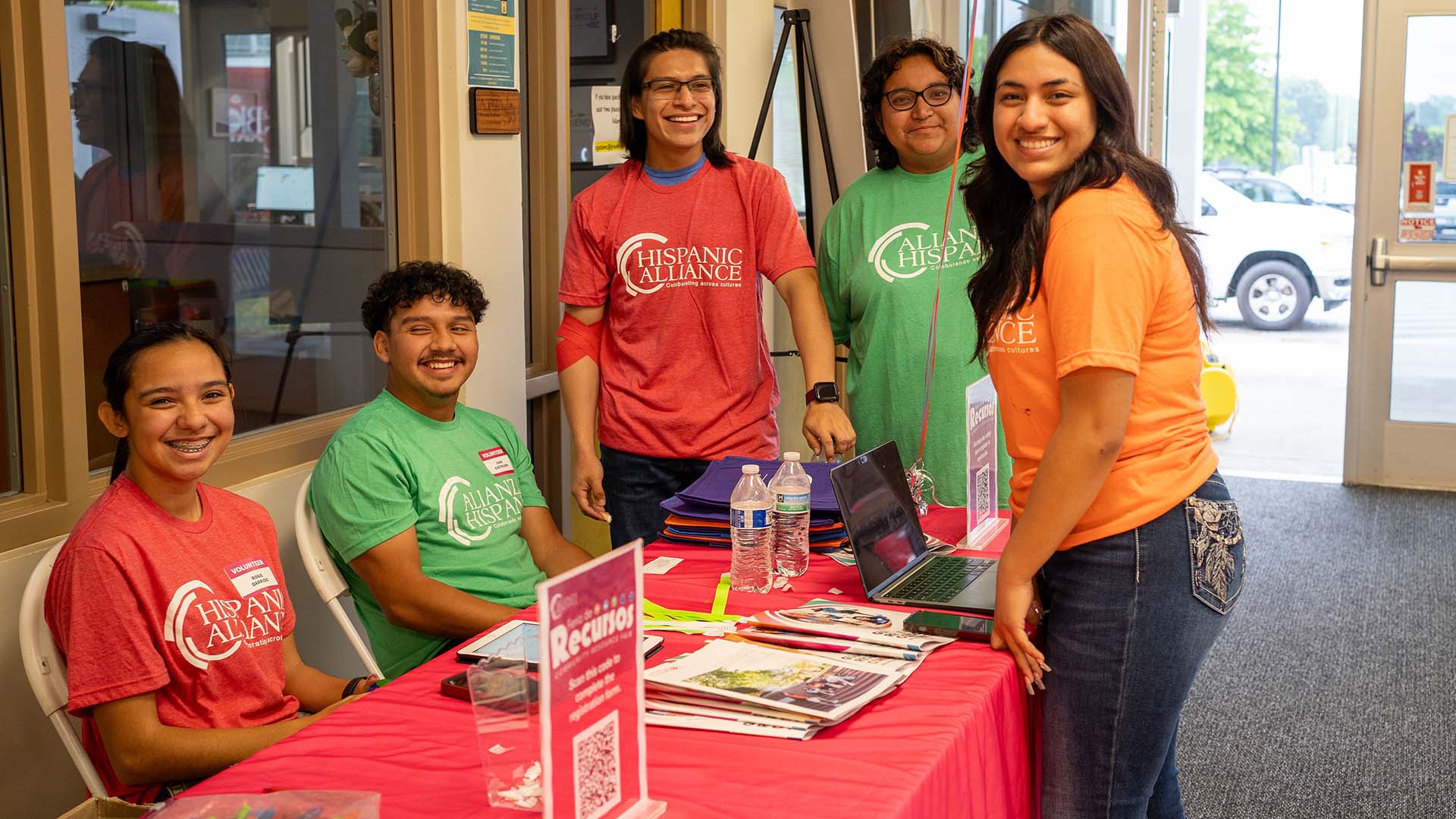
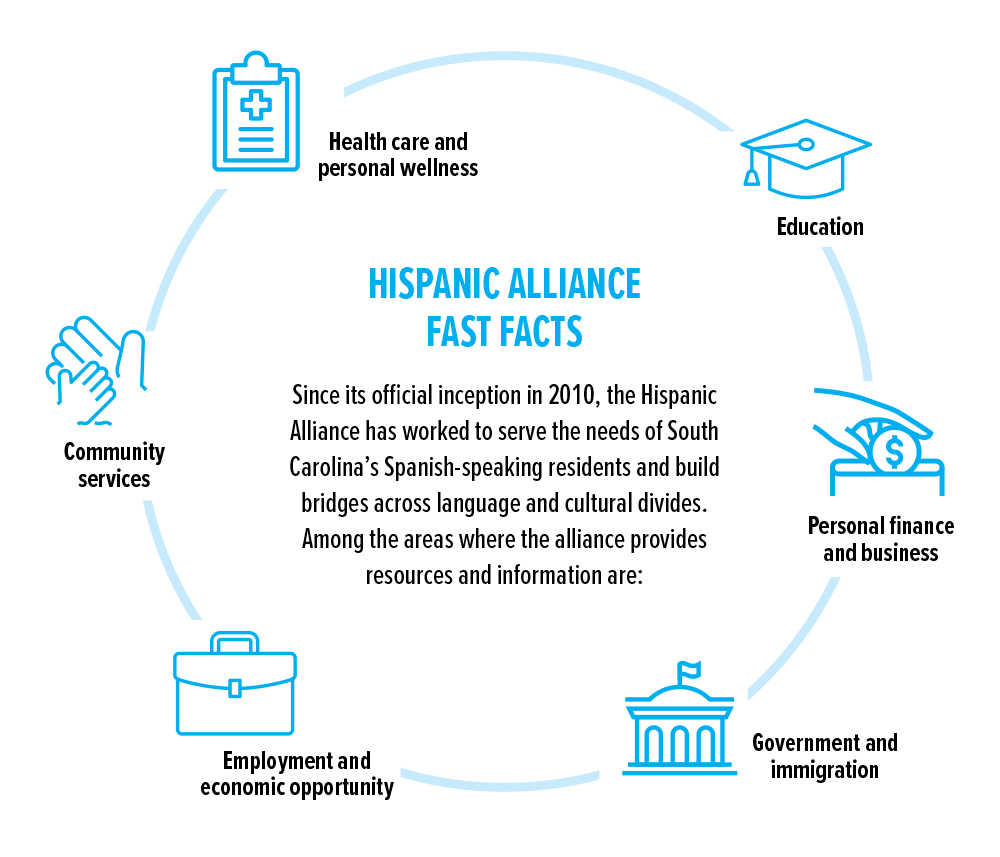
From those ad hoc beginnings building a network to serve the Hispanic community, the organization that would become the Hispanic Alliance began to emerge. It was officially founded in 2010.
For Greenville attorney and founder Tricia Ravenhorst, part of the organization’s success stems from the diversity of people and skills among the founders and those who have joined over the years. As an attorney specializing in immigration law, Ravenhorst brought a critical skill set but needed help connecting with people who needed her expertise.
León said one of the ways the group helped forge those connections was compiling an informational booklet that listed not only the organizations that provided those services, but a contact within the organization who could help navigate obtaining those services.
 For Treanor, having that booklet to give her ESOL students was a meaningful way she could build trust and connection.
Although the booklets provided a wealth of information that helped countless individuals and families, it served the broader goal of advancing systemic impacts, León said.
“And little by little, we gained traction, and we attracted people that made the organization what it is today,” he said.
Treanor and León credit much of the Hispanic Alliance’s evolution into an impactful institution to the leadership of Adela Mendoza, who joined the nonprofit as executive director in 2012.
Treanor said when Mendoza came on board, the group’s ideas became bigger and their commitment to forging lasting change became more ambitious.
Middleton said Mendoza helped the group understand a crucial aspect of its mission was helping “old Greenville” understand and accept the emerging “new Greenville.”
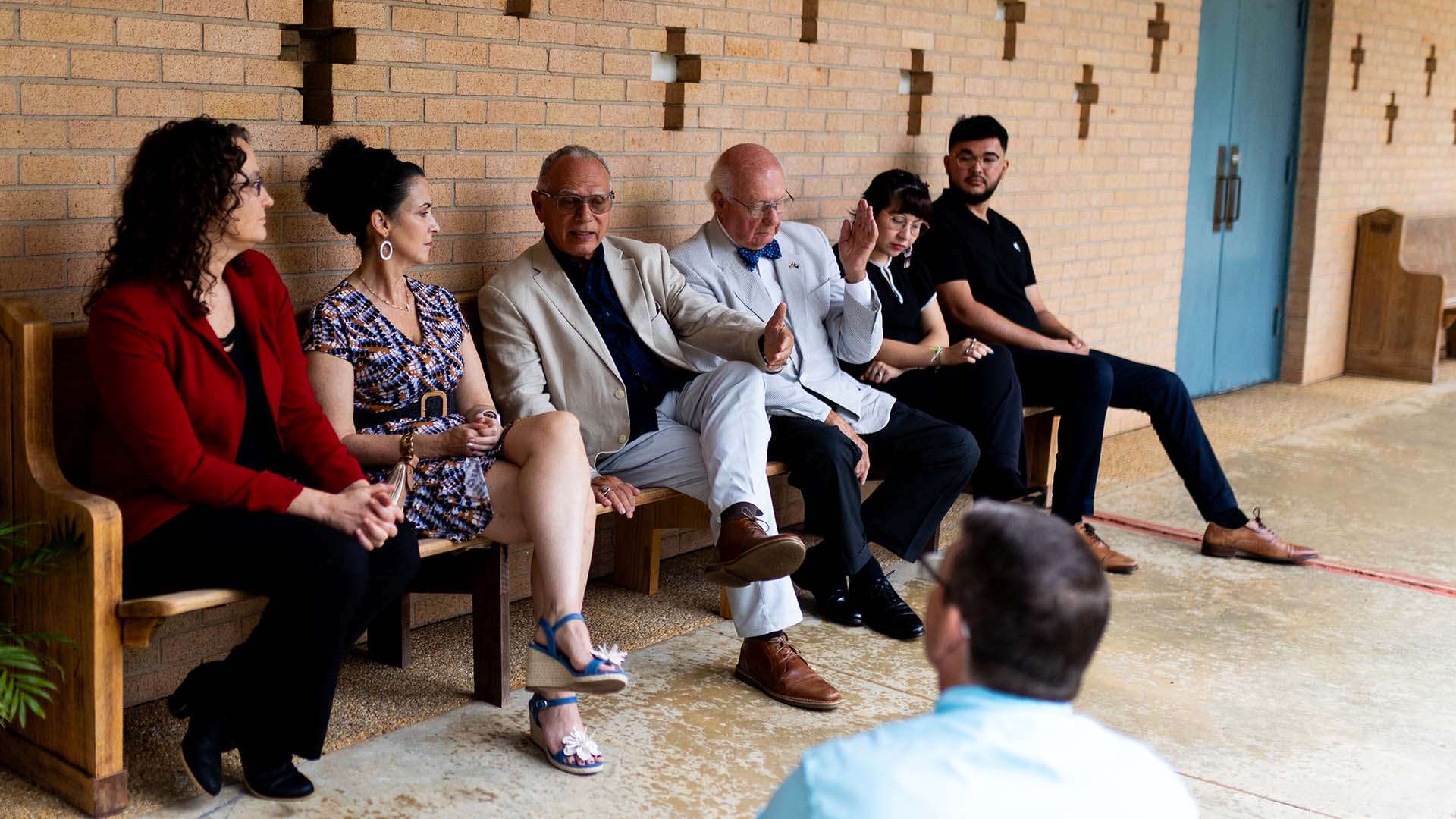 From left on bench, Tricia Ravenhorst, Lissette Treanor, Wilfredo León, Alfred Middleton, and Student DREAMers Alliance alums Diana Hoyos Lopez and Jose Daniel Rodriguez talk at the former site of St. Francis Episcopal on Edwards Road in Greenville.
The ongoing challenge
While progress has been made, the current national climate of polarization and mistrust has made the work of the Hispanic Alliance more important than ever. Part of the difficulty comes down to what metaphor you use to describe American society, León said.
The country has traditionally been described as a melting pot where each ingredient is subsumed in a homogeneous whole, but that’s never been particularly accurate, León said. Instead, the better image is thinking of the country as a beautiful salad where each colorful ingredient retains its identity and, because of that, adds something unique to the whole.
The idea is not about more people competing for a limited number of seats at the table, but of building a bigger table where everyone can have a seat.
“We Latinos, we the people who support Latinos, are not about taking anything away from anyone,” León said.
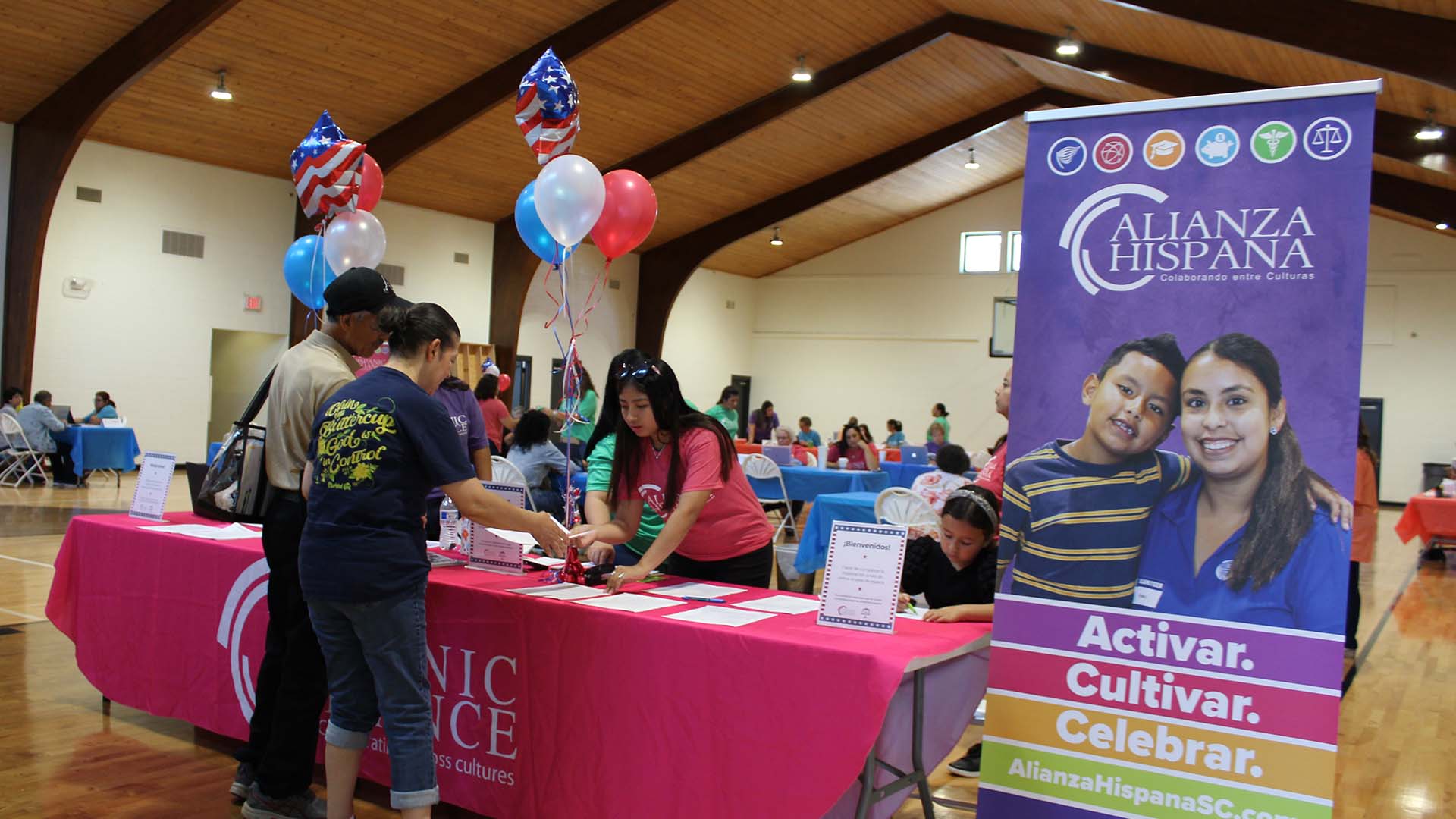 Treanor sees that tremendous additive potential in her students.
“There’s so much creativity and brilliance and open-minded thinking,” she said. “But these young people are all about, ‘Where can we take us? How far can we go?’”
For Ravenhorst, the Hispanic Alliance’s years of building connections throughout the community will prove vital in weathering the current political and social storms.
“I think that Hispanic Alliance has really tapped into that sense of neighbor helping neighbor, that there’s a way for us to uplift each other individually and organization to organization,” she said. “I hope we have built a strong foundation and a commitment to connection above all else.”
Upcoming events
- Hispanic Heritage Month runs from Sept. 15 to Oct. 15 and celebrates the unique contributions of Spanish-speaking cultures to American society.
- La Fiesta is the Sept. 12 gathering where the Hispanic Alliance celebrates the sponsors and supporters who have helped make the group’s work possible.
Student DREAMers Alliance inspires new generation of leadership
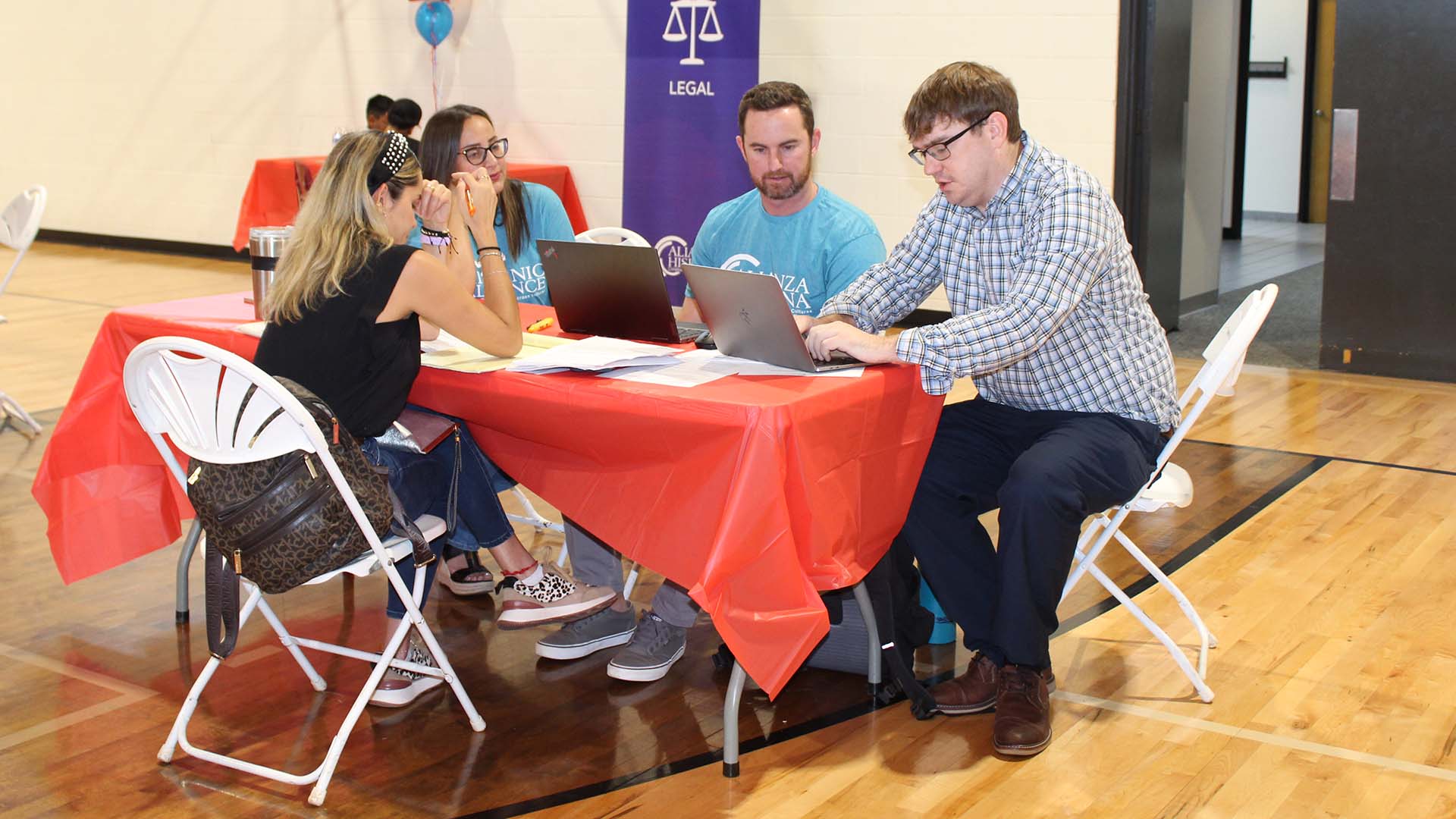
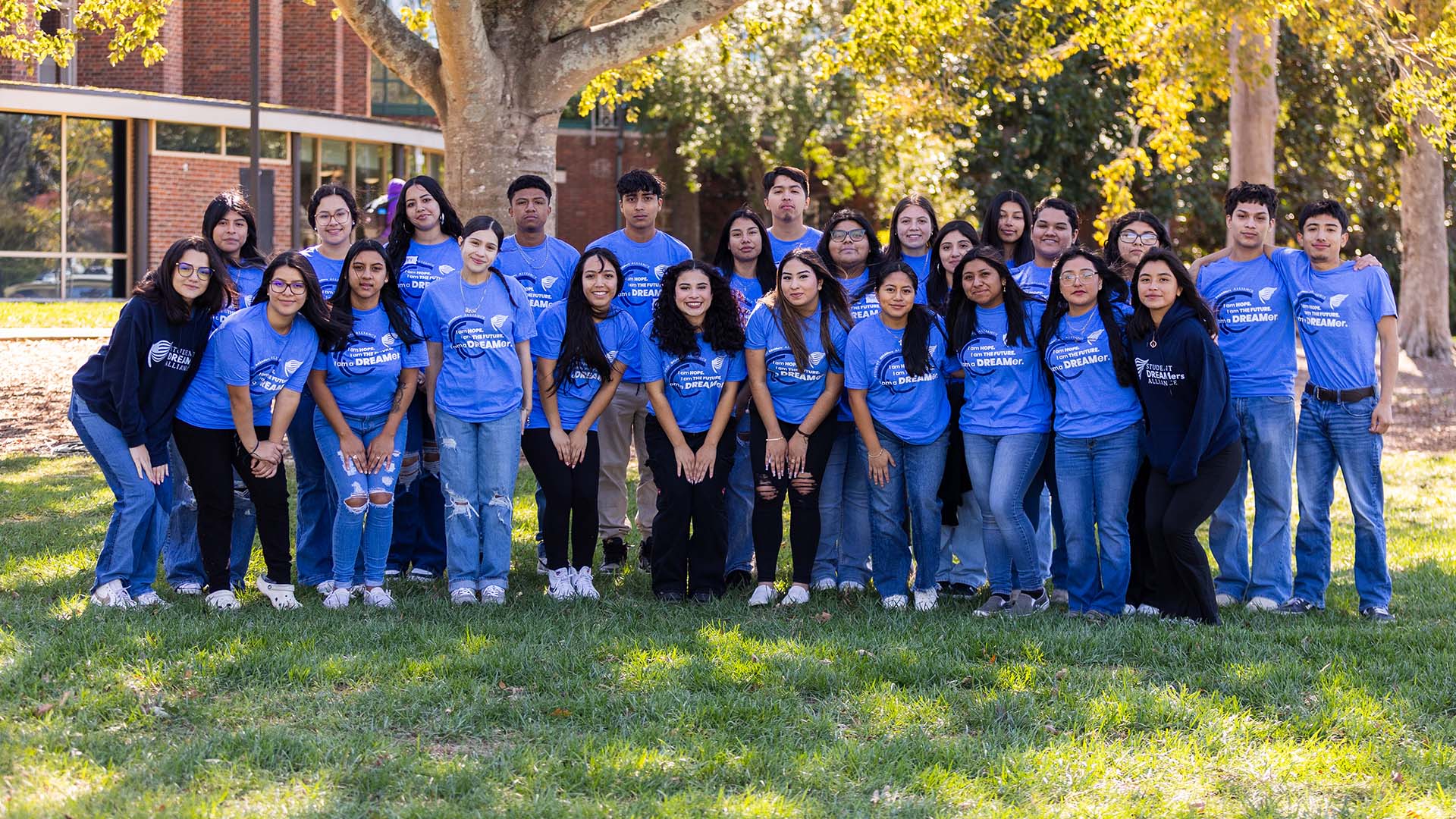
Of all the programs and advocacy the Hispanic Alliance has advanced over nearly two decades, perhaps none has been as consequential as the Student DREAMers Alliance.
Begun in 2016, the SDA is aimed at expanding opportunity and nurturing new generations of leaders within the state’s Hispanic community.
For Diana Hoyos Lopez and Jose Daniel Rodriguez — two students in the SDA’s inaugural cohort — the experience with the program was as much about empowerment and discovery as it was about the mechanics of obtaining a college education.
Lopez is pursuing a career in public health and works with LiveWell Greenville. She said her desire to give back to her community is rooted in something one of her teachers said during her year as an SDA student.
“Don’t let your status define who you are,” she was told. At the time she was a high school student with a DACA status that seemed to bar almost every door to her future.
“Once I joined the Student Dreamers Alliance, that’s when I came to realize I can do much more than what has been closed off for me,” she said.
But having gone through that experience, she now feels an empathy and connection with other students who may be facing similar uncertainty. She also said it is important for people to understand that she and other young people like her dealing with the anxiety of an uncertain immigration status did not choose that path for themselves.
“I wish that many other students like myself wouldn’t have to experience the same level of trauma that I have been through,” she said. “That’s why the Student Dreamers Alliance is so important because it helps remind students … you’re not alone in this process.”
For Rodriguez, who was the first person in his family to attend college, the SDA provided concrete guidance that helped transform the aspiration of college into a plan that made it a reality.
Just learning about scholarships and other funding sources opened the door to his undergraduate and graduate education at Clemson University, he said. Beyond that, the encouragement and community of going through similar experiences with other SDA students helped him achieve his educational goals.
Both Lopez and Rodriguez said going through SDA and getting involved with the broader work of the Hispanic Alliance have been hugely beneficial and produced in them a desire to help others.
Lopez said for her and for many people, it’s hard to put yourself in a vulnerable position and admit you need help.
“It’s OK to admit that you need help,” she said. “We’ve all been in that position and … we’re all on this struggle bus together.”
For more information, visit scdreamers.org.