
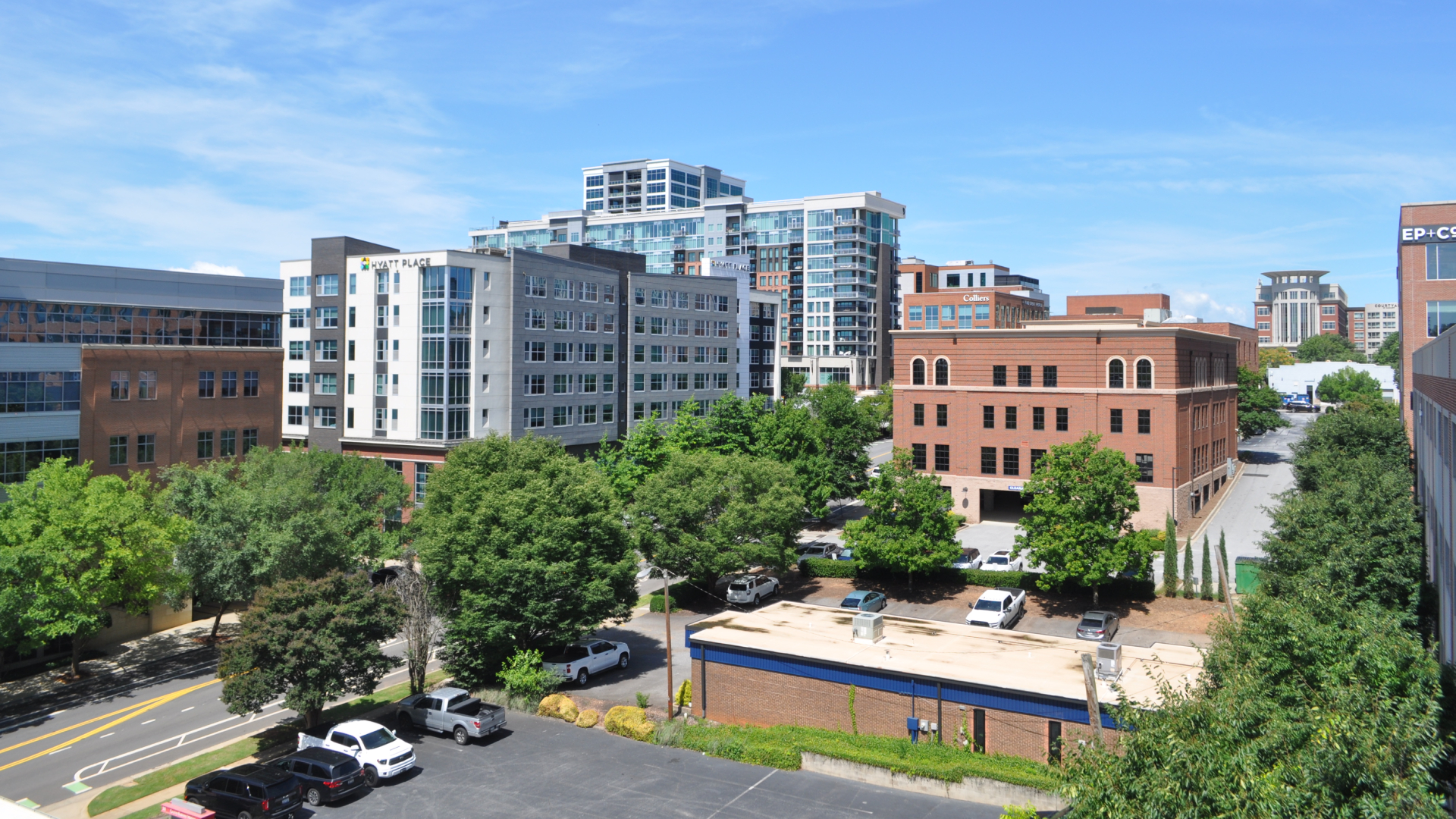
Greenville is known for integrating nature into its urban environment, from its iconic downtown waterfall to its expansive park system.
Another important natural element of the city is its tree canopy. City staff are currently looking at ways to strengthen and expand Greenville’s urban forest over the next 20 years.
The city kicked off a one-year planning process to create its first Urban Forest Comprehensive Plan at the beginning of 2026. Cincinnati-based Urban Canopy Works was hired as the consultant for the project.
The Urban Forest Comprehensive Plan will provide a long-term vision for the city’s urban forest, outlining future strategies, goals and policy recommendations. Community input and data analysis will inform the development of the new planning document.
Community members recently had the opportunity to weigh in on the Urban Forest Comprehensive Plan during a public workshop held June 16. Attendees provided input on the current challenges and future goals for the city’s tree canopy.
Purpose and objectives
Drew Smith, the city’s urban forester, said the Urban Forest Comprehensive Plan will help the city better maintain, preserve and increase its tree canopy, which has declined in recent years. According to the city, the total average tree canopy in Greenville was 37% in 2023, down from 40% in 2019.
This decline can be attributed to tree clearing for large commercial and residential developments, individual tree removal in neighborhoods and natural tree loss due to disease or extreme weather events.
Nara Baker, a consulting urban forester with Urban Canopy Works, said there is currently more impervious area within the city, such as roads and buildings, than areas shaded by trees. According to the city, expanding the urban tree canopy in Greenville would help with climate control, air quality and stormwater mitigation.
The planning process for the Urban Forest Comprehensive Plan includes taking inventory of Greenville’s existing tree canopy. The tree inventory, which is currently wrapping up, will provide a map of the city’s current trees, identifying their species, health, condition and maintenance needs.
City staff and consultants from Urban Forest Canopy will use this tree inventory and other data to identify areas in which more trees are needed to strengthen the city’s canopy. The planning document will also include planting strategies to ensure the city’s urban forest has a diversity of tree species and is climate resilient.
Another key element of the Urban Forest Comprehensive Plan will be recommendations for enhancing the city’s tree ordinance adopted in 2021. The ordinance requires developers and property owners to either re-plant trees or pay a fee to the city’s tree fund after removing heritage trees from their property.
Baker explained that a majority of the trees in Greenville are on private property. Therefore, the city will need to work with the community to achieve the strategic vision of the Urban Forest Comprehensive Plan.
“It’s not just a plan for the city staff to implement,” Baker said. “It takes everyone in the community to be successful together. This plan will be based on the community direction, and it will create a shared vision and strategies.”
Feedback and discussion
Development of the city’s Urban Forest Comprehensive Plan is currently in the discovery phase, which runs until September. This project phase focuses on assessing the city’s existing urban forest and engaging with the community.
Baker explained that the initial public feedback collected by the consultants identified a need for:
- More education about trees for property owners and developers
- Better protection of mature trees affected by development
- Increased focus on an equitable tree canopy and maintenance
- Improved tree planting, species choices and invasive management
- Enhanced tree maintenance on public property
- Better resilience focused on post-storm recovery
Attendees at Tuesday’s public workshop participated in group discussions about their concerns and goals regarding the tree canopy in Greenville. Christine Lancianese, a local resident, believes that there should be more restrictions against removing trees within the city.
“I want to see more trees,” Lancianese said. “Trees create beauty, and they’re wonderful for shade. I like to see more of them everywhere.”
Public engagement for the Urban Forest Comprehensive Plan will continue throughout the summer. Baker said a second virtual Q&A meeting will be held in July. The project’s consultants also plan to conduct community interviews, stakeholder workshops and a speaking circuit with neighborhood associations and other groups. In addition, an online tree survey is available for residents to fill out.
City staff will work with the project’s consultants to review the collected public feedback and data to develop the Urban Forest Comprehensive Plan. Baker said the community will have the opportunity to review the plan’s draft goals and strategies before they are finalized. A draft version of the planning document is expected to be completed by February 2027.
For more information, visit greenvillesc.gov/2735/Urban-Forest-Comprehensive-Plan.
Project timeline
- Phase 1: Project Launch, Jan.-April 2026
- Phase 2: Discovery, April-Sept. 2026
- Phase 3: Plan Development, Oct. 2026-Feb. 2027
***
By the numbers
According to the city, the total average tree canopy in Greenville was 37% in 2023, down from 40% in 2019.


